

The Birds of Bonaire — 2025 Taxonomy Changes
The 2025 update has created a new species for many Bonaire birders.
Posted November 19, 2025.
The 2025 taxonomy update gives Bonaire birders a brand new species! Read on!
Birders on Bonaire have been buzzing lately—and not just because we’ve been enjoying migration season. The 2025 update to the Clements Checklist, the taxonomy followed by eBird, has officially rolled out, and several species recorded here on our island have undergone notable revisions. These changes reflect advances in genetics, vocal analysis, and global efforts to unify bird naming systems.
But before diving into what’s new, let’s briefly explore what taxonomy is and why it changes.
What Is Taxonomy?
Taxonomy is the scientific system we use to name, organize, and classify living organisms. For birds, taxonomy tells us which birds count as distinct species, how they’re related, and what scientific names they carry. Because our understanding of bird evolution changes with new research, taxonomy is continually refined.
The Four Major Bird Taxonomy Lists.
Globally, four major bird checklists are in use:
- Clements Checklist (used by eBird)
- IOC World Bird List (International Ornithologists’ Union)
- BirdLife International Checklist
- Howard & Moore Checklist
Each has historically used slightly different species concepts, naming conventions, and update cycles.
To bring clarity to global bird science, a collaborative initiative—the Working Group Avian Checklists (WGAC) under the International Ornithologists’ Union—is working toward merging these lists into one unified global avian taxonomy. Progress is steady, but achieving worldwide agreement takes time.
Taxonomy Changes in the Americas.
Here in the Americas, most birders rely on eBird, which uses the Clements Checklist. Every August, the American Ornithological Society (AOS) and the Clements team release updates that:
• incorporate the WGAC’s progress toward a unified world list
• apply new scientific findings, especially from DNA research
• refine species boundaries
These updates sometimes result in:
• Splits – when one species is recognized as multiple distinct species
• Lumps – when previously separate species are combined into one
Splits generally occur when research reveals deep genetic or behavioral differences. Lumps arise when differences once thought significant turn out to be minimal.
The 2025 update includes several changes that are particularly relevant to birders on Bonaire.
2025 Taxonomy Updates Affecting the Birds of Bonaire.
1. Yellow Warbler (Golden Group) → Split into Mangrove Yellow Warbler (Lesser Antillean)
Perhaps the most impactful change for Bonaire is the formal split of the Yellow Warbler.
The bird previously recorded on Bonaire as part of the widespread Yellow Warbler complex is now officially:
Mangrove Yellow Warbler (Setophaga petechia rufopileata)
Why the Split?
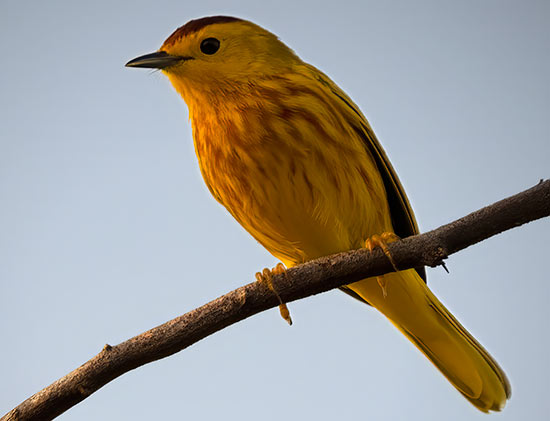
Genetic studies and plumage distinctions show that mangrove-dwelling populations in the Caribbean are significantly different from their mainland relatives. They have:
• unique reddish facial caps or masks
• distinct song patterns
• evolutionary separation associated with insular habitats
For Bonaire, this means our Mangrove Yellow Warblers are recognized as part of a more narrowly defined species with its own conservation value.
2. Whimbrel → Split into Eurasian and Hudsonian
Another major change affects one of our migratory shorebirds.
The formerly single species Whimbrel has been split into:
• Eurasian Whimbrel (Numenius phaeopus)
• Hudsonian Whimbrel (Numenius hudsonicus)
Which One Occurs on Bonaire?
The birds that stop over on Bonaire’s shores are now officially the:
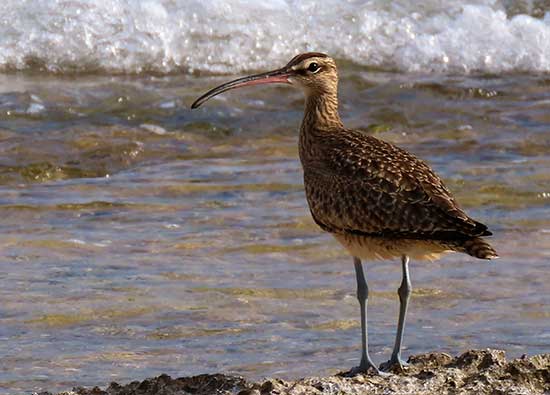
Hudsonian Whimbrel (Numenius hudsonicus)
Why the Split?
Research shows clear genetic, plumage, and vocal differences. The Hudsonian form, which breeds in North America and migrates through the Caribbean and South America, is more distantly related to the Eurasian population than previously understood.
This change better reflects migratory patterns and helps track population trends for conservation.
3. Striated Heron → Split, but No Change for Bonaire’s Form
The Striated Heron complex has long been suspected of containing more than one species. The 2025 update formalizes that split.
However, the lineage occurring in Bonaire retains the familiar name:
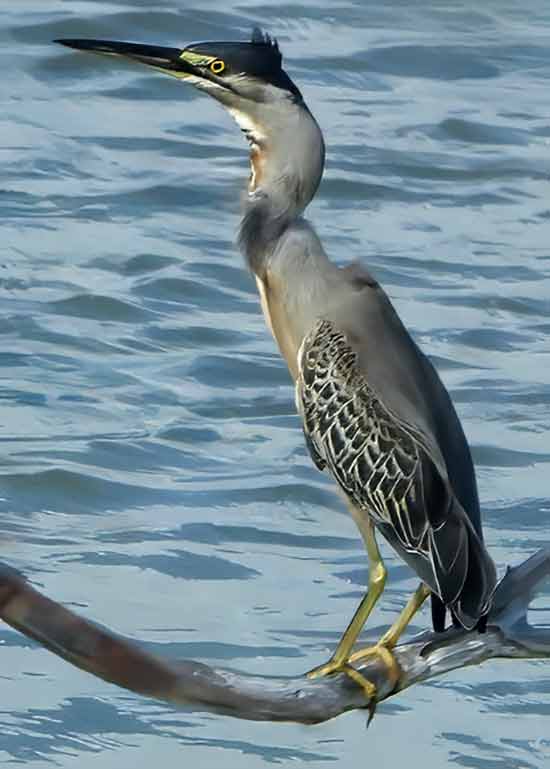
Striated Heron (Butorides striata)
What Changed?
Populations in Asia and Australasia have been separated into their own species due to genetic and vocal divergence.
The Neotropical form, found from Central America through northern South America (including Bonaire), continues under Butorides striata because its range and genetic identity remain consistent with the original definition. Read more about this rare visitor from South America.
So while the species was split, the heron’s scientific name stays the same for observations on Bonaire.
Summary.
The 2025 Clements Checklist update brings meaningful clarification to several species seen here on Bonaire:
• Mangrove Yellow Warbler is now recognized as distinct from the broader Yellow Warbler complex.
• Hudsonian Whimbrel replaces the formerly generalized Whimbrel for our region.
• Striated Heron was split globally, though Bonaire’s birds keep their traditional scientific name.
These refinements highlight the importance of island populations, migration pathways, and modern genetics in shaping our understanding of the birds around us.
Final Thoughts.
Taxonomy may seem technical, but changes like these deepen our appreciation for Bonaire’s avian diversity. Each update sharpens the picture of how birds evolve, migrate, and interact with their environments. Furthermore, as global efforts continue toward one unified world bird list, birders can look forward to even clearer, more consistent ways to document the species that make Bonaire such a special place for wildlife.
(Images courtesy of the author.)

Sign up to receive notifications when a new article is posted.
About the author:
 Susan has been living on Bonaire for over 30 years. She is a certified bird guide, as well as a topside and underwater photographer. She is a 2016 graduate of the Caribbean Birding Trail Interpretive Guide Course conducted by BirdsCaribbean.
Get in touch with Susan
Contact Susan via email, Facebook Messenger, call Susan or use the online form below.
If you have any questions about your Bonaire birding tour, feel free to contact Susan for answers. She is always willing to go into more detail about routes or the best times for a tour based on your personal preferences. Tours can be tailored to your interests, whether that be birds, photography, or both!
It is also a good idea to do some homework on the birds of Bonaire before you come. Knowing a little about the birds you might encounter on your tour will make your experience even more enjoyable!
Be sure to check out these resources for birding on Bonaire. Also, reading the Bird Blog will introduce you to the birds that might be observed on Bonaire.
Get In Touch
Get in touch with Susan to check availability for the dates you are visiting Bonaire.
Consent: By using this form you agree with the storage and handling of your data by this website.
