

Quick Facts about Bonaire’s birds.
Get the facts about some of Bonaire’s most sought-after birds.
Bonaire Bird Quick Facts
Get ready to meet some of Bonaire’s incredible feathered residents! Our Quick Facts section provides a glimpse into the fascinating lives of these birds. Here, you’ll find essential information about each species, including:
Scientific Name
Learn the official scientific name for each bird, allowing you to delve deeper into its classification and evolutionary history.
Diet
Discover what these birds like to eat, from insect-loving insectivores to fish-eating specialists. Understanding their diet can help you picture their role in Bonaire’s ecosystem.
Breeding Habits
Learn about the clutch size for each species or other unique information about its breeding habits.
Conservation Status
Find out the conservation status of a species. The IUCN Conservation status gives the likelihood of a bird species’ disappearance from the wild.
These Quick Facts are just a starting point for your birding adventure on Bonaire. With a little knowledge, you’ll be able to appreciate these birds not just for their beauty, but also for their fascinating behaviors and ecological roles. So, get ready to be amazed by the diverse avian wonders of Bonaire!
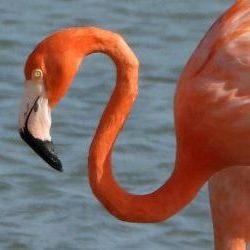
American Flamingo
(Phoenicopterus ruber)
Diet: Small shrimp, seeds, blue-green algae, microscopic organisms, and mollusks
Breeding: Lays 1 egg
Status: Least Concern
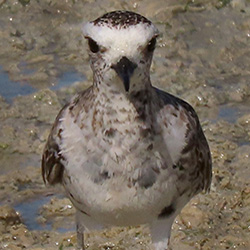
American Golden Plover
(Pluvialis dominica)
Diet: Invertebrates, primarily terrestrial, some freshwater and marine; also berries, leaves, and seeds
Breeding: Lays 4 eggs
Status: Least Concern
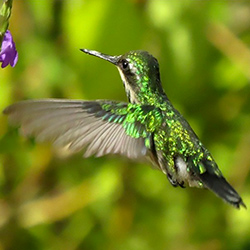
Blue-tailed Emerald
(Chlorostilbon mellisugus)
Diet: Nectar and insects
Breeding: Lays 2 eggs
Status: Least Concern

Brown-throated Parakeet
(Eupsittula pertinax)
Diet: Feeds upon fruits, seeds, and cactus flowers
Breeding: Lays 3 to 6 eggs
Status: Least Concern
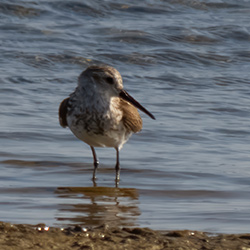
Dunlin
(Calidris alpina)
Diet: Aquatic invertebrates
Breeding: Typically four eggs are laid and are incubated by both parents
Status: Least Concern, but the population is diminishing
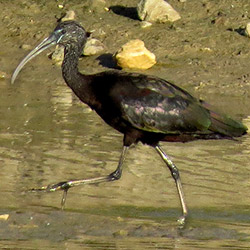
Glossy Ibis
(Plegadis falcinellus)
Diet: Insects, mollusks, crustaceans, and occasionally fish, amphibians, lizards, small snakes, or nestling birds
Breeding: Lays 3 to 4 eggs
Status: Least Concern
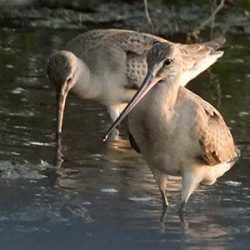
Hudsonian Godwit
(Limosa haemastica)
Diet: Aquatic invertebrates
Breeding: Lays 2 to 4 eggs
Status: Least Concern, but the population is diminishing
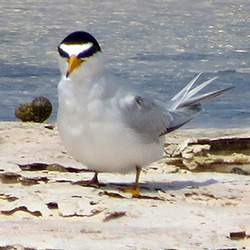
Least Tern
(Sternula antillarum)
Diet: Feeds by plunge-diving for fish
Breeding: Lays 2 to 3 eggs
Status: Least Concern, but populations are decreasing
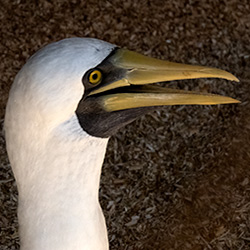
Masked Booby
(Sula dactylatra)
Diet: Mostly fish and squid, which they capture in dives from the air, sometimes plunging into the sea.
Breeding: Lays one or two eggs in a shallow depression on the ground.
Status: Low Concern
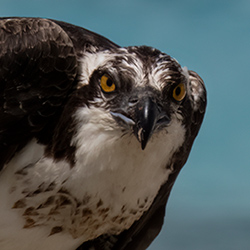
Osprey
(Pandion haliaetus)
Diet: Its main food source is live fish.
Breeding: Lays two to four eggs in a nest constructed of sticks located high on utility poles or trees.
Status: Least Concern
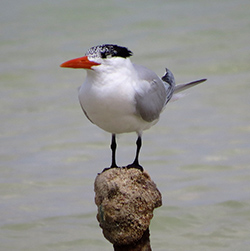
Royal Tern
(Thalasseus maximus)
Diet: Feeds on small fish, but they also eat insects, shrimp, and crabs
Breeding: Lays 1 or 2 eggs
Status: Least Concern
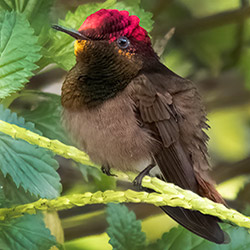
Ruby-Topaz
(Chrysolampis mosquitus)
Diet: Nectar and some small insects
Breeding: Lays 2 eggs
Status: Least Concern
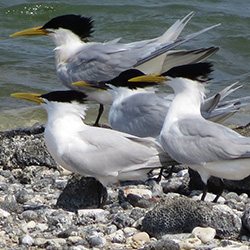
Sandwich Tern (Cayenne)
(Thalasseus sandvicensis eurygnathus)
Diet: Feeds by plunge-diving for fish, almost invariably from the sea
Breeding: Lays 1 to 3 eggs
Status: Least Concern
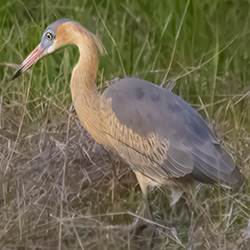
Whistling Heron
(Syrigma sibilatrix)
Diet: Fish, amphibians, insects, crustaceans, small mammals, reptiles
Breeding: A normal clutch is 3-4 pale blue and speckled eggs
Status: Least Concern
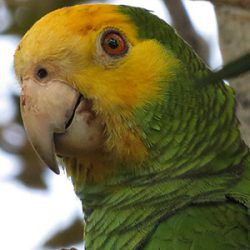
Yellow-shouldered Amazon
(Amazona barbadensis)
Diet: Feeds upon fruits, seeds, and cactus flowers
Breeding: Lays 3 or 4 eggs
Status: Vulnerable
Get In Touch
Get in touch with Susan to check availability for the dates you are visiting Bonaire.
Consent: By using this form you agree with the storage and handling of your data by this website.
