

The Herons and Egrets of Bonaire
An Identification and Natural History Guide for visiting birders.
The first thing many visiting birders notice isn’t necessarily the flamingos—it’s the statues.
Stand beside one of Bonaire’s shimmering salt pans early on a calm morning, or quietly watch the mangroves at Lac Bay as the sun climbs over the island, and you’ll soon notice them–tall, elegant birds that stand almost impossibly still, their reflections mirrored in the shallow water. Minutes may pass without movement. Then, in the blink of an eye, a long neck unfurls like a spring, a dagger-like bill pierces the water, and a fish disappears.
These are the “statues,” the herons and egrets of Bonaire: masters of patience, stealth, and precision. While the island is deservedly famous for its American Flamingos, Yellow-shouldered Amazon Parrots, and terrestrial birds with South American origins, its collection of herons and egrets is equally impressive. From the energetic Snowy Egret dashing through shallow water with golden feet flashing beneath the surface, to the towering Great Blue Heron patiently stalking the shoreline, every member of the family has evolved its own unique hunting strategy.
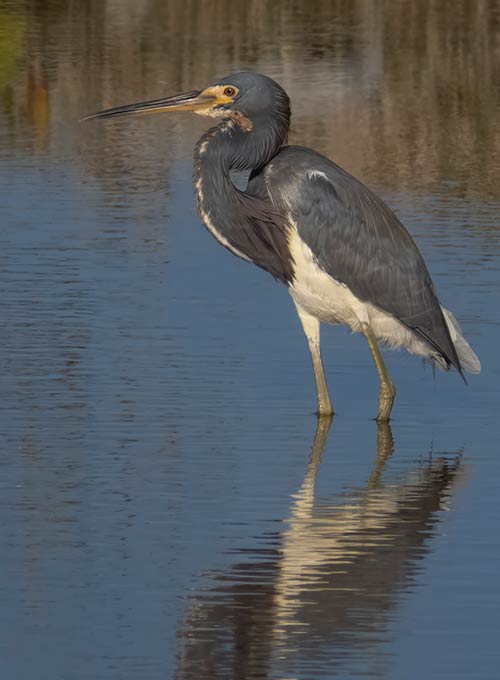
A Tricolored Heron stands quietly in a pond, using stealth to hunt.
Better still, these birds are often remarkably approachable. With a little patience—and a respectful distance—it is possible to observe hunting behavior, courtship displays, and even the occasional squabble between rivals. Spend a few days exploring the island’s wetlands, and you’ll soon discover that every species has its own personality.
One Family, Many Personalities.
Although we commonly speak of “herons” and “egrets” as though they are separate groups, all belong to the family Ardeidae, a remarkably successful lineage of long-legged wading birds found on every continent except Antarctica.
So what is the difference between a heron and an egret?
Surprisingly, not very much. But there are some subtle differences in appearance as well as general behavioral distinctions.
In general, birds called egrets tend to be white, with slightly more delicate proportions, although this is not true in all species. Their bills tend to be long, slender, and dagger-like. Birds called herons are usually gray, blue, brown, or chestnut, although there are notable exceptions. The Little Blue Heron begins life entirely white before gradually changing into its adult slate-blue plumage, while the Reddish Egret occurs in both dark and white color morphs. The bills on herons tend to be very stout and thick at the base, and–while long–not as “dagger-like” as those of egrets.
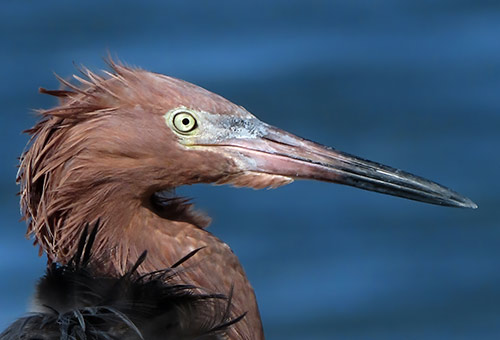
The bill of the Reddish Egret is slim and long like a dagger.
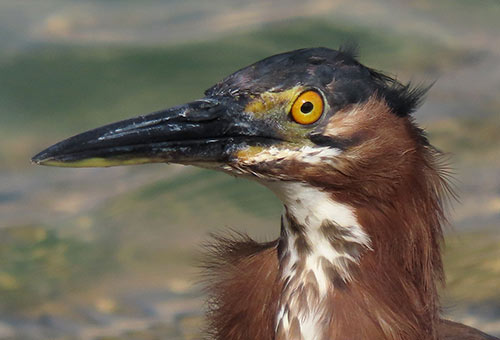
The bill of the Green Heron is thicker and very stout at the base.
Behavior offers a few additional clues. Many herons rely on extraordinary patience, remaining motionless for extended periods before striking with astonishing speed. Several egrets, particularly the energetic Reddish Egret, adopt much more active hunting styles, chasing prey through shallow water. Even so, there is considerable overlap, and no single behavior separates one group from the other.
In truth, herons and egrets represent variations on a remarkably successful design. Long legs allow them to wade into water without soaking their feathers, elongated toes distribute their weight over soft mud, S-shaped necks act as biological springs, and sharply pointed bills function as precision spears.
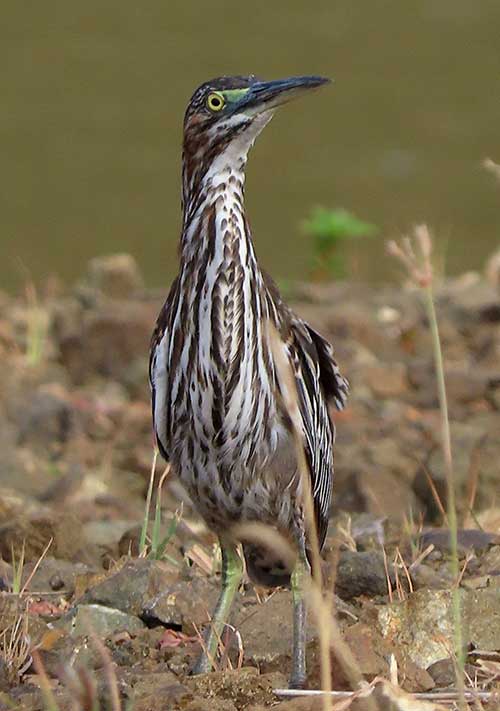
A juvenile Green Heron can look remarkably different from the adult it will become.
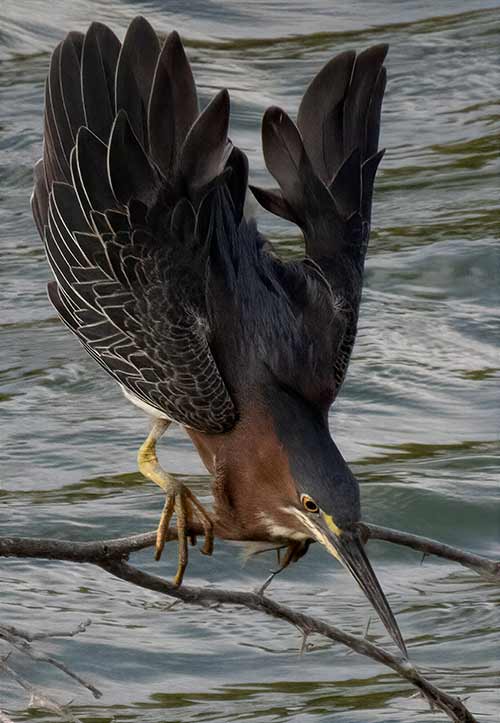
An adult Green Heron forages in a fresh-water pond on Bonaire.
Learning the Language of Plumage.
One aspect of heron identification that often confuses beginning birders is plumage terminology. Field guides frequently refer to juveniles, immatures, non-breeding adults, breeding adults, and morphs. Understanding these terms makes identifying Bonaire’s birds considerably easier.
A juvenile is a bird in its first plumage after leaving the nest. Juvenile herons often wear heavily streaked or mottled feathers that provide excellent camouflage.
An immature bird has left its juvenile plumage but has not yet acquired full adult coloration. Depending on the species, this transition may take one or even several years.
During the breeding season, many herons develop elegant ornamental feathers, brighter facial skin, or changes in bill and leg color. These temporary features are collectively referred to as breeding plumage.
Finally, some species occur in different morphs, meaning genetically determined color forms. Bonaire’s Reddish Egret is the best example, occurring in both a dark morph and a less common white, or light, morph. Unlike juveniles, morphs do not change into one another with age.
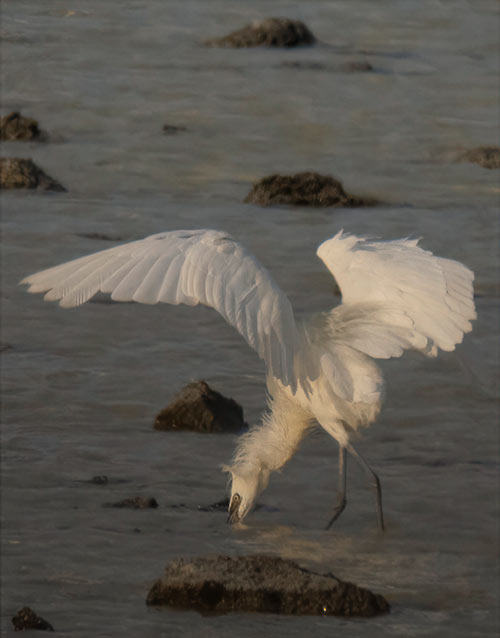
A white morph Reddish Egret forages in Bonaire’s salt ponds.
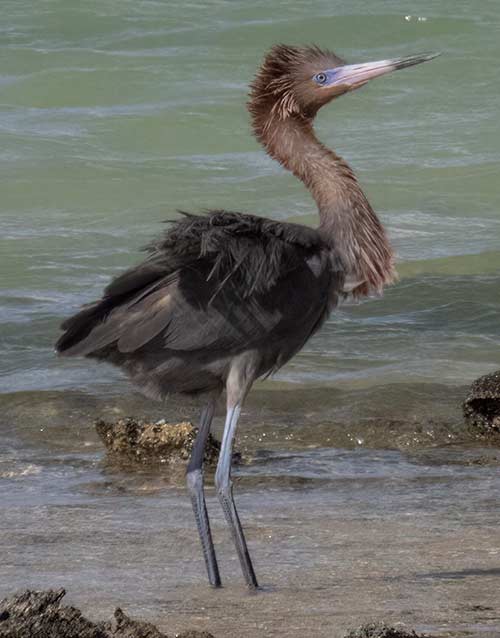
A Reddish Egret exhibits the more common plumage of the dark morph.
Five Tips for Identifying Bonaire’s Herons and Egrets.
After a few days on the island, most birders discover that identifying herons becomes far less intimidating than it first appears. The secret is to look beyond color alone.
1. Start with size.
Ask yourself whether the bird is small, medium, large, or enormous. A Green Heron and a Great Blue Heron are separated by more than two feet in height (.6 meters).
2. Look at the legs and bill.
Leg color, bill thickness, and bill color often narrow the possibilities dramatically, especially among white species. For example, the Snowy Egret’s black legs and brilliant yellow feet are unlike those of any other regularly occurring white heron on Bonaire.
3. Watch how the bird hunts.
Behavior is often the best field mark of all. A bird racing through shallow water with wings spread is almost certainly a Reddish Egret. A bird standing statue-like for several minutes may be a Great Egret or Great Blue Heron.
4. Consider the habitat.
Mangroves, rocky shorelines, salt pans, freshwater ponds, and grasslands/agricultural fields all favor different species. Simply knowing where you are can eliminate several possibilities before you even lift your binoculars.
5. Don’t forget age.
Many identification puzzles disappear once you remember that young birds often look completely different from adults. The white juvenile Little Blue Heron remains the classic example.
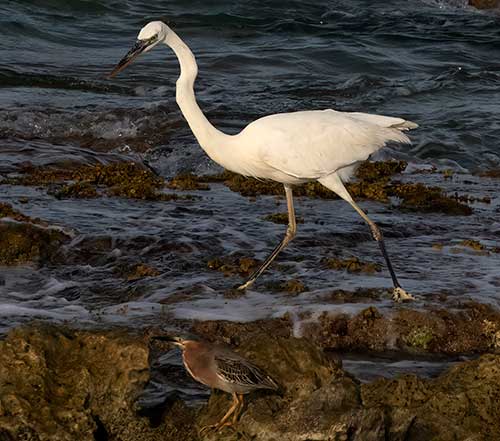
A Great White Heron (the largest heron observed on Bonaire) with the island’s smallest heron, the Green Heron.
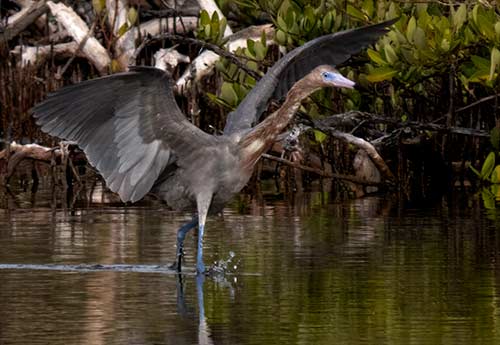
A Reddish Egret exhibits “canopy foraging.” While sprinting in the shallows, it spreads its wings to create shade, which can limit glare.
Quick Reference Table for Heron and Egret Identification on Bonaire.
| Species | Size | Main Color | Best Bonaire Habitat | Signature Field Marks |
|---|---|---|---|---|
Green Heron | Small | Darkish body with chestnut | Mangroves | Small, dark, and hunched. |
Western Cattle Egret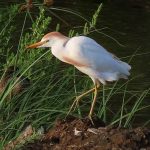 | Small to medium | White | Grasslands/agricultural fields | Think of a white heron in the pasture. |
Snowy Egret | Medium | White | Salt ponds, coastal lagoons, fresh-water ponds | Black legs, golden slippers. |
Little Blue Heron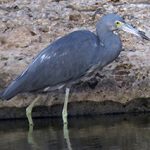 | Medium | Blue (adult), white (juvenile) | Fresh or brackish shorelines | White when young, blue when grown. |
Tricolored Heron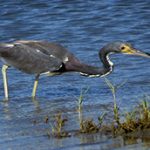 | Medium to large | Blue-gray and white | Salt ponds and coastal lagoons | Blue above, white below. |
Black-crowned Night Heron | Medium | Gray and black | Fresh or brackish water ponds | Compact body, red eyes, black cap. |
Yellow-crowned Night Heron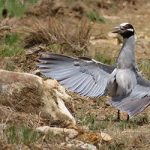 | Medium to large | Gray | Shorelines | Yellow crown, white cheek, heavy bill. |
Reddish Egret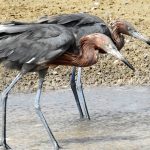 | Large | Dark gray with rufous or white | Salt ponds or brackish shorelines | "Dancing" style of foraging |
Great Egret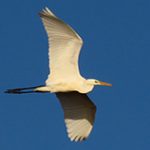 | Large | White | Open wetlands | Large, all white, black legs, yellow bill. |
Great Blue Heron | Very large | Blue-gray | Coastal waters or salt ponds | Immense size |
Conservation: More Than Beautiful Birds.
The abundance of herons and egrets on Bonaire is no accident.
Healthy mangroves, productive salt ponds, protected wetlands, and relatively undisturbed coastlines provide the rich feeding grounds these birds require throughout the year. Many species also depend upon the island as a resting or wintering site during migration.
Local nature organizations, together with conservationists, both here and abroad, have worked for decades to protect these habitats. Their efforts benefit not only herons and egrets but also flamingos, shorebirds, Ospreys, and countless other species that rely upon Bonaire’s remarkable wetlands.
As birders, we contribute by observing responsibly. Remaining on established roads and trails, avoiding disturbance near nesting colonies, and giving feeding birds plenty of space ensures that future visitors will enjoy the same unforgettable encounters.
Before You Leave Bonaire…
- Visit the salt pans at least once at dawn or late afternoon.
- Watch the mangroves quietly for 15 minutes.
- Look closely at every “white egret.”
- Listen for the calls of hidden herons.
- Remember that every bird has a story.
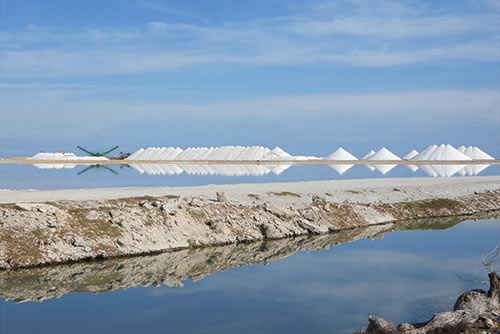
If you spend enough time watching Bonaire’s herons and egrets, something interesting happens.
At first, they all seem similar—long legs, long necks, pointed bills, and patient expressions. But gradually each develops its own distinct personality.
The Green Heron becomes the ingenious problem-solver that sometimes uses tools to catch fish.
The Western Cattle Egret reveals itself as one of nature’s greatest opportunists, happily exchanging wetlands for grazing animals.
The Little Blue Heron teaches us that appearances can be deceiving, transforming from a snowy-white juvenile into a graceful slate-blue adult.
The two night herons remind us that not all birding takes place beneath bright sunshine, while the Yellow-crowned Night Heron demonstrates the remarkable specialization that evolution can produce.
The exuberant Reddish Egret turns every hunt into a theatrical performance, sprinting, spinning, and dancing across the shallows in pursuit of fish.
The Great Egret embodies elegance and patience, while the Great Blue Heron stands as the quiet giant of Bonaire’s wetlands.
And now and then, a Whistling Heron, Great White Heron, or Striated Heron appears to remind us that birding always contains an element of surprise.
Perhaps that is the greatest lesson these birds have to offer. Identification is about more than memorizing colors or measurements. It is about learning to see behavior, habitat, posture, movement, and personality. Once you begin to notice these details, the birds seem to introduce themselves.
The next time you find yourself standing beside the shimmering waters of Pekelmeer, quietly watching the mangroves of Lac Bay, or exploring the secluded coves of Washington-Slagbaai National Park, pause for a moment. One of Bonaire’s herons or egrets may already be watching the water with patient concentration, waiting for the perfect opportunity.
With a little practice, you’ll know exactly which one it is.
Did you know?
- Green Herons are among the few birds known to use tools to catch prey.
- Reddish Egrets occur in both dark and white color morphs.
- Juvenile Little Blue Herons are completely white before gradually changing to blue.
- The Great Egret became an early symbol of wildlife conservation after millions were killed for their breeding plumes in the late 1800s.
- Snowy Egrets use their bright yellow feet to stir prey from the mud.
- Yellow-crowned Night Herons are specialists that feed primarily on crabs.
Bonaire Heron and Egret Identification
This primer on Heron and Egret Identification provides information about each species’ appearance, size, behavior, and field marks.
The species most commonly encountered on Bonaire are listed first, with visiting rarities listed afterwards.
Green Heron (Butorides virescens)
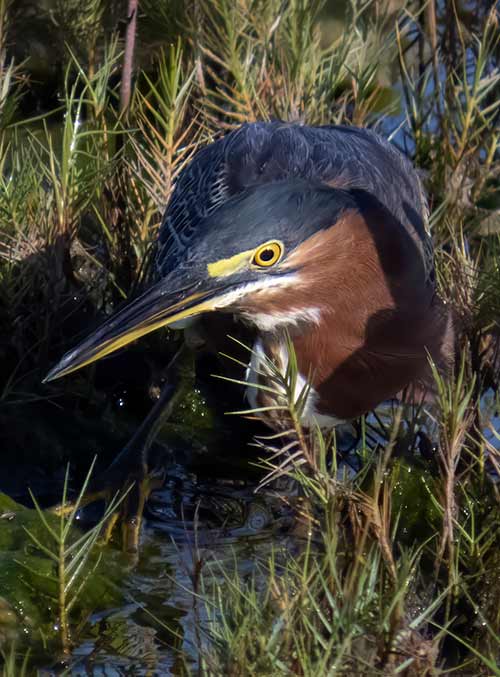
Few birds demonstrate the old saying “good things come in small packages” better than the Green Heron. Although it is the smallest regularly encountered heron on Bonaire, it is arguably one of the most fascinating.
Appearance
Adult Green Herons are handsome birds with a rich chestnut neck, glossy bluish cap, gray wings, and bright yellow legs that often become orange during the breeding season. Their relatively short legs and compact posture make them appear much stockier than most herons.
Juveniles look remarkably different. Instead of rich chestnut and green tones, they wear heavily streaked brown plumage with buff spotting across the wings, blending beautifully into reeds and mangrove roots. This camouflage often makes young birds nearly invisible until they move.
Unlike many larger herons, Green Herons seldom appear particularly elegant. Instead, they spend much of their time hunched over with their neck compressed, only revealing its surprising length when striking at prey.
Size
At approximately 18 inches (46 cm) in length, the Green Heron is one of the smallest members of the family. Visitors often underestimate it at first glance, especially when compared with nearby Great Egrets or Great Blue Herons.
Behavior
The Green Heron is famous among ornithologists for one extraordinary reason: it is one of the very few bird species known to use tools.
Individuals have been observed dropping feathers, leaves, insects, small twigs, and even pieces of bread onto the water’s surface to lure curious fish within striking distance. Once the fish approaches the floating object, the heron delivers a lightning-fast strike. This remarkable behavior, documented repeatedly across its range, places the Green Heron among a select group of birds demonstrating sophisticated problem-solving abilities.
Even without tools, Green Herons are consummate ambush hunters. Rather than actively chasing prey, they rely on stealth, moving almost imperceptibly before striking with astonishing precision.
Field Marks
Think “small, dark, and hunched.” No other regularly occurring heron on Bonaire combines such compact proportions with rich chestnut coloring and short yellow legs.
Western Cattle Egret (Ardea ibis)
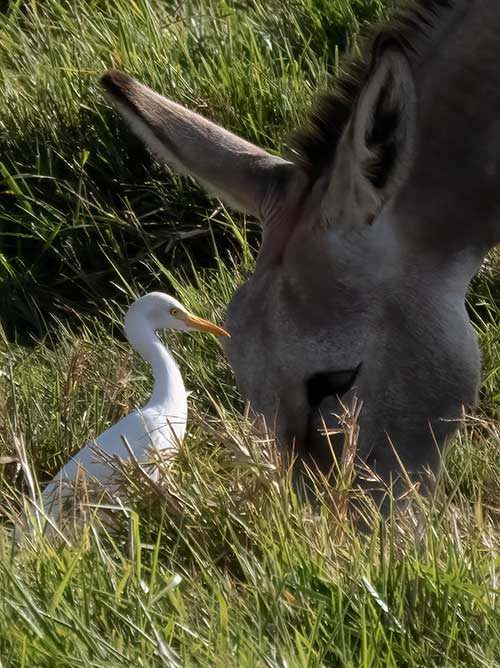
If the Green Heron is Bonaire’s quiet genius, the Western Cattle Egret is its great opportunist.
Unlike most members of the heron family, this species often abandons wetlands in favor of open fields, livestock pastures, and roadside verges. It has become one of the most successful birds on Earth, expanding naturally from its ancestral home in Africa to occupy nearly every continent within little more than a century.
Appearance
For much of the year, adults are entirely white with a sturdy yellow bill and relatively short yellowish to gray legs. Compared with other white egrets, they appear noticeably stockier, with a shorter neck and heavier body.
During the breeding season they undergo an elegant transformation. Soft buff-orange plumes develop on the crown, breast, and back, while the facial skin flushes pinkish-red and the bill becomes brighter. These subtle but beautiful colors are often overlooked by casual observers.
Juveniles closely resemble non-breeding adults, although their plumage is slightly cleaner and their bills somewhat duller.
Size
Standing about 20 inches (50 cm) tall, the Western Cattle Egret is smaller than the Great Egret but noticeably bulkier than its height alone suggests.
Behavior
Unlike nearly every other heron on Bonaire, the Western Cattle Egret spends much of its day far from water.
Its preferred strategy is to follow large grazing animals, capturing insects, spiders, frogs, and small reptiles disturbed by their movements. On Bonaire, these companions include goats, donkeys, horses, and occasionally even tractors plowing agricultural fields. Rather than spearing fish, Western Cattle Egrets often seize prey directly from the ground with quick, precise pecks.
This remarkable ecological partnership explains the bird’s astonishing success around the globe.
Field Marks
Think “the white heron in the pasture.” If an egret is feeding comfortably in an agricultural field, or among goats or donkeys rather than standing knee-deep in water, chances are excellent it is a Western Cattle Egret.
Snowy Egret (Egretta thula)
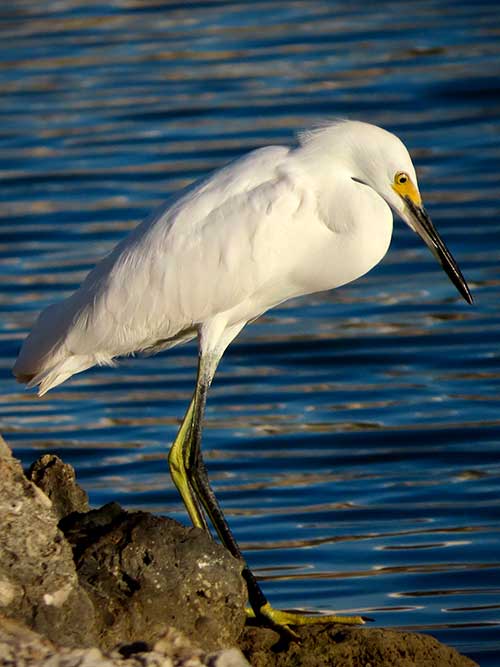
One of the liveliest members of Bonaire’s wetlands, the Snowy Egret combines elegance with boundless energy. Where a Great Egret often stands patiently for long periods, the Snowy Egret rarely seems content to remain still for more than a few seconds.
Appearance
Adults are entirely white with slender black bills, black legs, and perhaps the species’ most famous feature—bright golden-yellow feet. During the breeding season, they develop delicate white plumes on the head, neck, and back, while patches of facial skin become more colorful.
Immatures resemble adults but lack the elaborate breeding plumes, and their legs may display more yellow than an adult’s all-black legs.
Size
Standing about 24 inches (61 cm) tall, the Snowy Egret is noticeably smaller and more delicate than the Great Egret but slightly larger than the Western Cattle Egret.
Behavior
Snowy Egrets frequently stir the water with their bright yellow feet, shuffle rapidly through the shallows, vibrate one foot to flush prey, or suddenly sprint after small fish. Unlike the patient hunting style of larger herons, Snowy Egrets rely upon movement to provoke a reaction from hidden prey.
Watching one feed is often as entertaining as watching a Reddish Egret, although its movements are more refined and purposeful than theatrical.
Field Marks
“Black legs, golden slippers.”
Those brilliant yellow feet are among the easiest field marks of any Bonaire heron.
Little Blue Heron (Egretta caerulea)
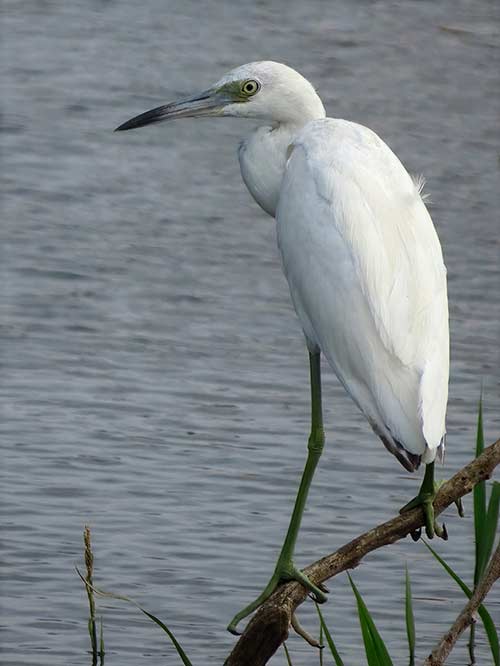
Ask experienced birders about the Little Blue Heron, and many will smile knowingly. Few birds have caused as much confusion among beginners, largely because young birds look nothing like the adults.
In fact, the transformation from white juvenile to slate-blue adult is one of the most remarkable plumage changes found among North American wading birds.
Appearance
If there were an award for the most confusing heron, the Little Blue Heron would surely be a leading contender.
Adults are elegant birds clothed in smooth slate-blue plumage with a rich maroon to reddish head and neck. Their long blue-gray bill ends in a distinctive black tip, while the legs are greenish-gray. During the breeding season, the head and neck become more intensely colored, and delicate plumes develop on the back and nape.
Juveniles, however, are almost entirely white. This often leads beginning birders to mistake them for small egrets. As they mature, they pass through an unforgettable “calico” stage, wearing an irregular patchwork of white and blue feathers that can make identification seem impossible—until you know what you’re looking at.
Why the white plumage? Ornithologists believe it may provide a feeding advantage. White juvenile Little Blue Herons often forage alongside Snowy Egrets and other white wading birds, allowing them to approach fish without arousing suspicion. Whether the resemblance truly offers protection or simply represents an evolutionary coincidence is still debated, but it remains one of the most fascinating plumage strategies among North American birds.
Size
At approximately 24 inches (61 cm) tall, the Little Blue Heron is a medium-sized member of the family—larger than a Green Heron but noticeably smaller and more slender than a Great Egret or Great Blue Heron.
Behavior
Little Blue Herons are quiet, methodical hunters. They seldom hurry, preferring to stalk slowly through shallow water before delivering a precise strike at fish, shrimp, aquatic insects, or small crabs.
Unlike the exuberant Reddish Egret, they rely almost entirely on stealth. Their movements are deliberate and economical, conserving energy while maximizing the chance of success.
Outside the breeding season, they are often surprisingly tolerant of other wading birds, feeding alongside egrets or flamingos without conflict.
Field Marks
Remember this simple phrase:
“White when young, blue when grown.”
If you encounter a white bird with a two-toned bill—bluish at the base and black toward the tip—it deserves a closer look. It may well be a young Little Blue Heron rather than an egret.
Tricolored Heron (Egretta tricolor)
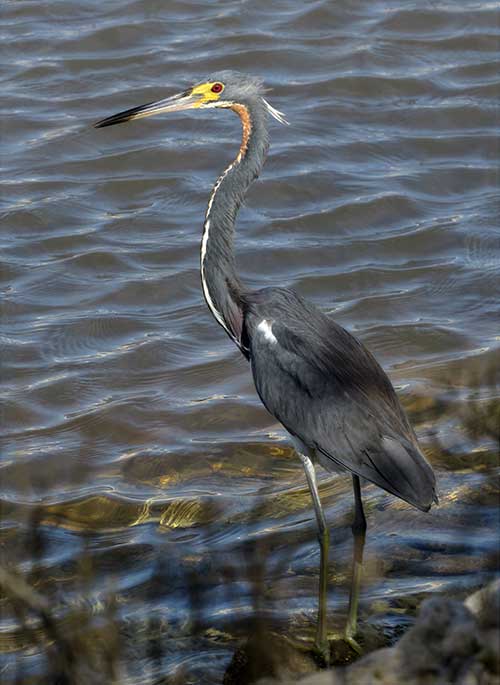
Graceful, slender, and surprisingly understated, the Tricolored Heron is often overlooked among Bonaire’s larger and more flamboyant wading birds. Yet many experienced birders consider it one of the island’s most elegant species.
Appearance
Adults possess blue-gray upperparts, a rich reddish throat, and a gleaming white belly that provides the “third color” from which the species derives its name. A long bluish bill with a dark tip and yellow facial skin complete the elegant appearance.
Juveniles are browner above, with streaked necks, but already display the distinctive white underparts.
During the breeding season, elongated plumes develop on the head and back.
Size
At approximately 26 inches (66 cm), the Tricolored Heron falls between the Little Blue Heron and the Great Egret in size.
Behavior
The Tricolored Heron combines patience with sudden bursts of activity.
It often stalks prey slowly before making rapid lunges or briefly spreading its wings to shade the water. Fish make up the majority of its diet, although shrimp and aquatic insects are also taken.
Compared with the Little Blue Heron, it appears slimmer, longer-necked, and generally more active.
Field Marks
Think “blue above, white below.”
No other regularly occurring Bonaire heron combines slate-blue upperparts with a clean white belly.
Black-crowned Night Heron (Nycticorax nycticorax)
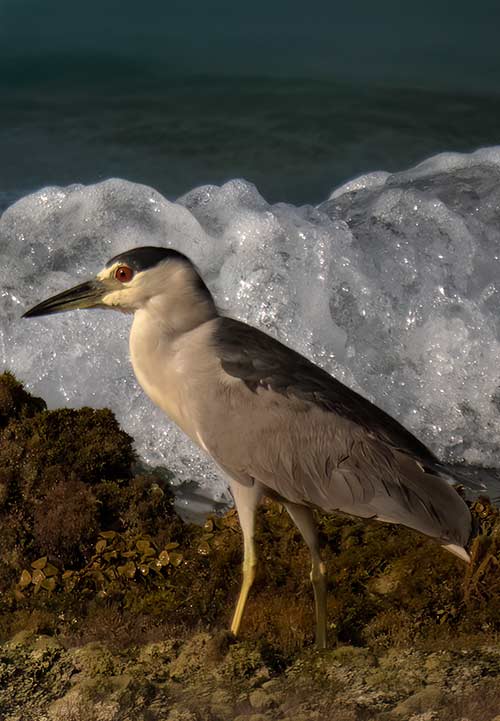
Where many herons seem almost regal, the Black-crowned Night Heron has a rather different personality. Compact, broad-shouldered, and somewhat hunched, it often appears as though it has somewhere important to be—but only after sunset.
This adaptable species is among the most widespread herons on Earth, occurring on every continent except Australia and Antarctica.
Appearance
Adults are strikingly handsome. The glossy black crown and back contrast beautifully with pale gray wings and white underparts. Bright crimson eyes provide an arresting splash of color, while two or three long white plumes trail gracefully from the back of the head during the breeding season.
Juveniles are altogether different. Rich chocolate-brown plumage, boldly marked with white spots and streaks, provides superb camouflage among reeds and mangroves. They require nearly three years to attain full adult plumage.
Size
Standing about 25 inches (64 cm) tall, the Black-crowned Night Heron appears stockier than many similarly sized herons due to its relatively short neck and broad body.
Behavior
As its name suggests, this species is primarily nocturnal.
During daylight hours it often spends long periods quietly roosting beneath mangroves or within dense vegetation, becoming active only as evening approaches. Around dusk it emerges to hunt fish, shrimp, frogs, insects, and small reptiles.
Its large, ruby-red eyes are no accident. Compared with many daytime herons, night herons possess proportionally larger eyes adapted for gathering as much available light as possible. These impressive eyes allow them to feed efficiently during twilight and darkness, when many prey species become more active.
Field Marks
Think “compact body, red eyes, black cap.”
No other regularly occurring heron on Bonaire combines such a stocky build with vivid red eyes and a bold black-and-gray pattern.
Yellow-crowned Night Heron (Nyctanassa violacea)
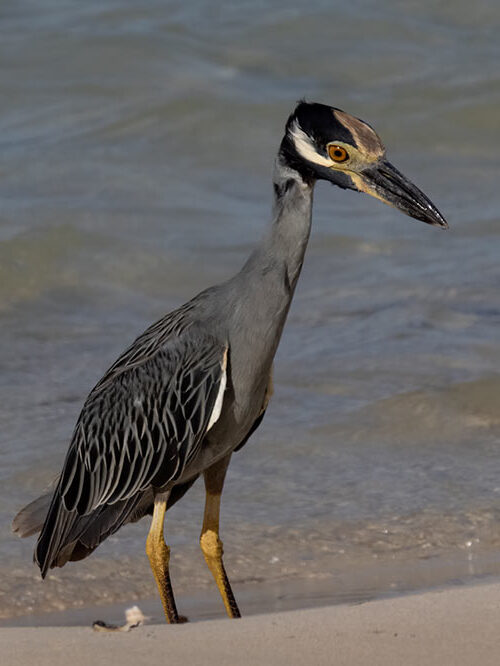
Although closely related to the Black-crowned Night Heron, the Yellow-crowned Night Heron has followed a rather different evolutionary path.
Instead of being a generalist, it has become a specialist—a bird remarkably well adapted to catching crabs.
Appearance
Adults possess an elegant combination of pearl-gray plumage, black face, yellow crown, and a crisp white cheek stripe that extends down the side of the neck. During the breeding season, elongated white plumes develop behind the head.
Juveniles are attractively patterned in brown with buff spotting but gradually acquire adult plumage over approximately two years.
Size
Slightly larger than its black-crowned cousin, the Yellow-crowned Night Heron averages about 28 inches (71 cm) in height while appearing somewhat slimmer and longer-legged.
Behavior
Few birds illustrate the concept of specialization better.
Rather than feeding primarily on fish, Yellow-crowned Night Herons actively seek crabs, which may comprise the overwhelming majority of their diet.
Their heavier bill is perfectly suited to grasping hard-shelled prey, and they are adept at dismantling surprisingly large crabs before swallowing them.
Like other night herons, they become most active during the cooler hours of evening and early morning, although they are often seen feeding during the day on Bonaire.
One of the pleasures of birding on Bonaire is watching a Yellow-crowned Night Heron carefully inspect crevices among coral rubble before suddenly extracting an unsuspecting crab.
Field Marks
Remember “yellow crown, white cheek, heavy bill.”
The bold facial pattern immediately distinguishes adults from every other Bonaire heron.
Reddish Egret (Egretta rufescens)
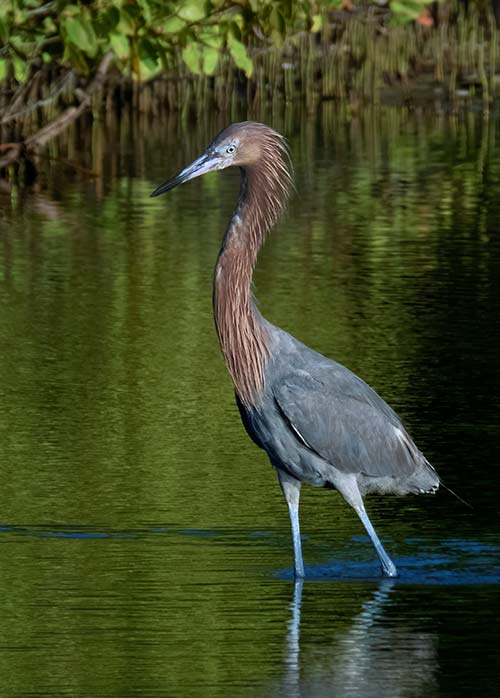
If every heron were invited to a dance, the Reddish Egret would unquestionably steal the show.
No other wading bird in the Caribbean feeds with such theatrical enthusiasm. Watching one hunt is like watching an improvisational ballet, complete with leaps, spins, outstretched wings, sudden sprints, and abrupt changes of direction.
It is little wonder that many experienced birders consider the Reddish Egret their favorite heron.
Appearance
Adults occur in two distinct color morphs.
The dark morph, by far the more common on Bonaire, possesses a slate-gray body with a rich cinnamon-rufous head and neck. The long bill is pink at the base with a black tip, while the legs are bluish-gray.
The light morph is almost entirely white, although careful observers will notice subtle grayish flight feathers and the same distinctive pink-and-black bill.
Juveniles resemble adults of their respective morphs but with duller plumage, darker bills without color, and shorter ornamental feathers.
Size
Standing about 30 inches (76 cm) tall, the Reddish Egret is intermediate in size between the Little Blue Heron and the Great Egret.
Its long legs and neck give it an especially elegant silhouette—at least when standing still.
Behavior
Standing still, however, is not something Reddish Egrets do for very long.
Unlike nearly every other heron, they actively pursue fish across shallow flats. Birds run, pivot, flap partially opened wings to create shade that reduces glare, leap over schools of fish, and repeatedly change direction in response to escaping prey.
This seemingly chaotic performance is extraordinarily effective.
Researchers have found that the “canopy feeding” behavior—using partially spread wings to shade the water—may both reduce reflections and make the bird less visible to fish below the surface.
To human observers, though, the performance often appears delightfully unrestrained.
Field Marks
Simply watch how it hunts.
Even at considerable distance, no other heron on Bonaire behaves quite like a Reddish Egret.
Great Egret (Ardea alba)
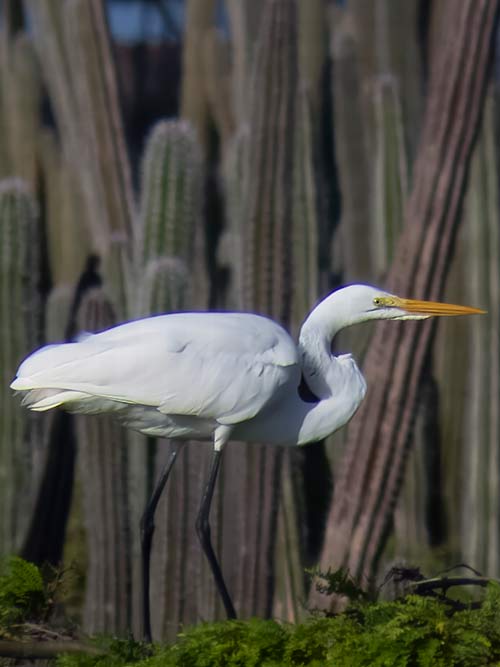
Among Bonaire’s wading birds, the Great Egret represents quiet elegance.
Tall, slender, and immaculate in white, few other birds better embody the grace traditionally associated with herons and egrets.
Appearance
There is a reason the Great Egret has become the symbol of elegance among wading birds.
Adults are clothed in immaculate white plumage, offset by a long yellow bill and black legs that seem almost impossibly slender. During the breeding season, they acquire magnificent lacy plumes—known as aigrettes—that cascade from the back. These ornamental feathers once made the species the target of the millinery trade in the late nineteenth century, when millions of birds were killed so their plumes could adorn fashionable hats.
The resulting public outcry helped inspire the modern bird conservation movement in both Europe and North America, making the Great Egret not only a beautiful bird but also an enduring symbol of wildlife protection.
Juveniles closely resemble adults but lack the spectacular breeding plumes. Note that the Great Egret does not breed on Bonaire.
Size
Standing approximately 39 inches (99 cm) tall, the Great Egret is among the tallest birds regularly encountered on Bonaire. Only the Great Blue Heron consistently exceeds it in height.
Behavior
Great Egrets are the embodiment of patience. They typically hunt by standing nearly motionless in shallow water, moving with deliberate precision before striking with astonishing speed. Fish make up much of their diet, but frogs, shrimp, crabs, and insects are readily taken.
Unlike the frenetic Reddish Egret, the Great Egret seems almost meditative. Every movement appears calculated, every step measured.
Field Marks
Remember “large, all-white, black legs, yellow bill.”
Although several white herons occur on Bonaire, none combine this size with such long black legs and graceful proportions.
Great Blue Heron (Ardea herodias)
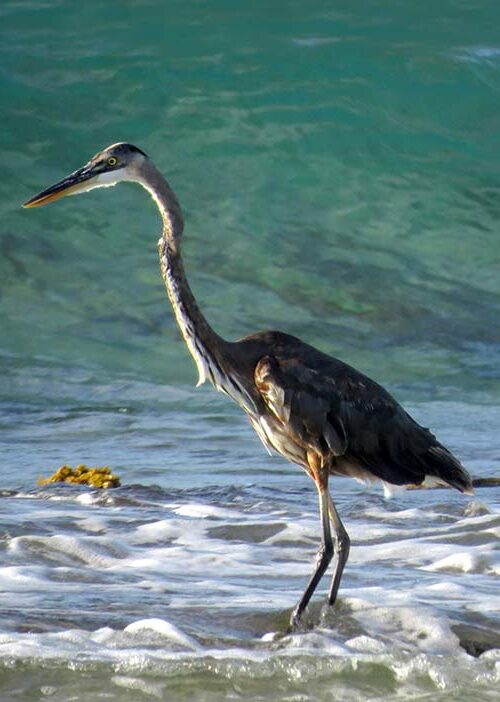
If the Great Egret represents elegance, the Great Blue Heron represents quiet authority.
North America’s largest heron is a commanding presence wherever it occurs. Standing well over a meter tall, it dominates the shoreline with effortless confidence. Yet despite its impressive size, it is capable of remarkable delicacy and precision.
Appearance
Adults are predominantly blue-gray with a white face accented by a bold black stripe that extends into elegant head plumes. The neck is pale gray streaked with black, while chestnut feathers decorate the thighs. Their massive blue and yellow bill appears almost oversized compared to the rest of the bird.
Juveniles are somewhat duller and lack the elongated breeding plumes but are already unmistakably impressive.
Size
At nearly 48 inches (122 cm) tall and with a wingspan approaching 7 feet (2.1 meters), the Great Blue Heron is the largest heron most visitors will ever encounter on Bonaire.
Seeing one take flight is unforgettable. Slow, powerful wingbeats carry the bird effortlessly above the salt pans, its neck folded into a characteristic “S” shape.
Behavior
Despite its size, the Great Blue Heron is an extraordinarily patient hunter. It stalks fish with slow, deliberate steps before launching a lightning-fast strike that is almost impossible for the human eye to follow.
Its size allows it to tackle prey unavailable to smaller herons. Large fish, eels, crabs, iguanas, young birds, rodents, and even small snakes have all been recorded in its diet.
Although generally solitary while feeding, Great Blue Herons tolerate the presence of other wading birds remarkably well.
Field Marks
Think “our gentle giant.”
No other regularly occurring heron combines such immense size with blue-gray plumage and a heavy blue and yellow bill.
The Rare Visitors
While the ten species described above account for the overwhelming majority of Bonaire’s herons and egrets, birding always contains an element of surprise. Every so often, unusual visitors appear, reminding us that birds sometimes pay little attention to the range maps printed in our field guides.
Finding one of these rarities is a memorable experience for both residents and visiting birders.
Whistling Heron (Syrigma sibilatrix)
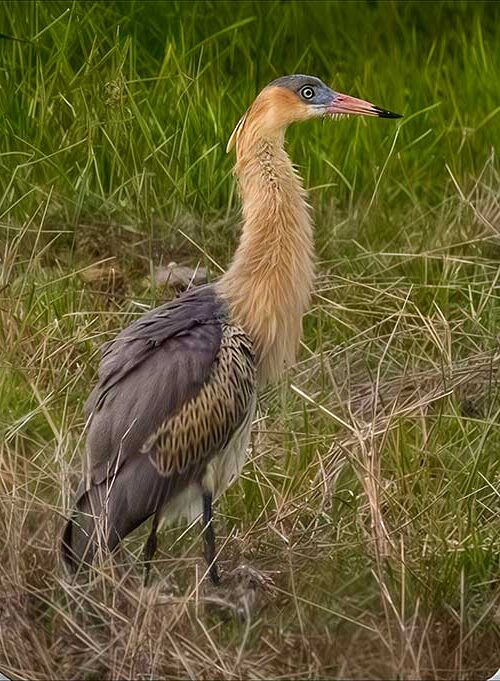
Among the world’s herons, the Whistling Heron is something of an eccentric.
Native to the grasslands and wetlands of South America, it is a surprisingly colorful bird, with soft gray plumage, buff neck, black crown, and blue facial skin.
Its common name derives from its loud, melodious whistles, which differ dramatically from the harsh croaks and squawks produced by most herons.
Unlike many of its relatives, the Whistling Heron often spends considerable time in open grasslands rather than standing in water, feeding on insects, frogs, and small reptiles.
Learn more about sightings of the Whistling Heron on Bonaire.
Great White Heron (Ardea herodias occidentalis)
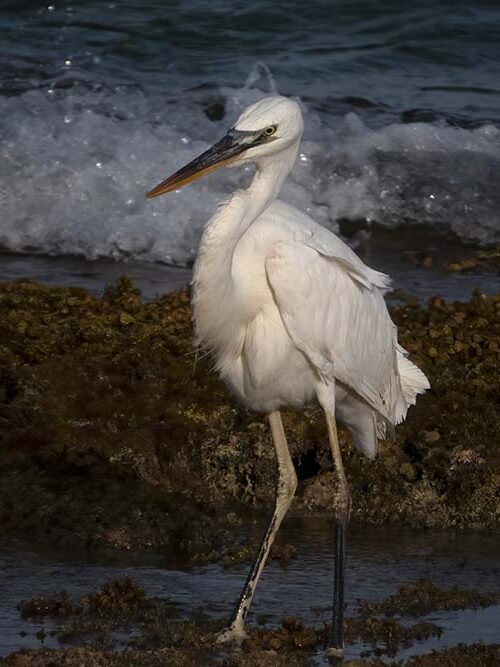
Few birds provoke more discussion among ornithologists than the Great White Heron.
Today, most authorities consider it the white morph or subspecies of the Great Blue Heron, restricted largely to southern Florida and the Florida Keys, and Cuba, although its exact taxonomic status continues to be debated.
Entirely white, with pale legs and a massive blue and yellow bill, it superficially resembles an oversized Great Egret. Careful observation, however, reveals a much heavier body, thicker neck, and more substantial bill—all classic Great Blue Heron characteristics.
Learn more about the taxonomy debate of the Great White Heron.
Striated Heron (Butorides striata)
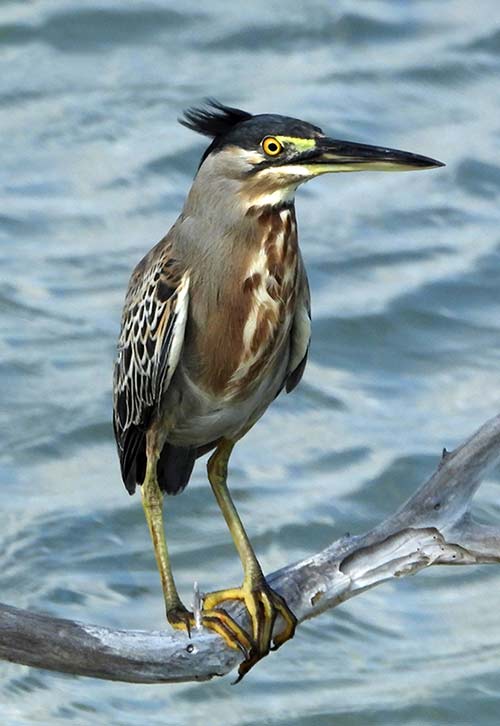
The Striated Heron is sometimes described as the Old World’s counterpart to the Green Heron, although they are now recognized as separate species.
Historically, the Striated Heron was distributed widely across Africa, Asia, Australia, and much of South America. However, genetic and vocal differences caused the species to be split into two separate species in the annual taxonomy update of 2025. The neotropical form resident in Central America and northern South America retained the name of Striated Heron.
Because Bonaire lies outside its expected range, any confirmed sighting generates excitement within the island’s birding community.
Learn more about sightings of the Striated Heron on Bonaire.
Neem contact op
Neem contact op met Susan om de beschikbaarheid te controleren voor de data dat je Bonaire bezoekt.
Toestemming: Door dit formulier te gebruiken gaat u akkoord met de opslag en verwerking van uw gegevens door deze website.
