

Bonaire’s Diverse Habitats Offer Solutions for Survival
With a mere 112 square miles, Bonaire’s habitat diversity offers one of nature’s greatest solutions for survival.
The surprising diversity of habitats on Bonaire offers resident and migrant birds solutions for survival.
To many visitors, Bonaire is best known for its crystal-clear waters, coral reefs, and world-class diving. But above the water lies an equally remarkable natural world. Within just 112 square miles, the island contains an extraordinary diversity of habitats, each offering unique opportunities for birds to feed, rest, breed, and survive.
This variety is especially important because Bonaire sits at the crossroads of migration. Every spring and fall, thousands of birds traveling between North and South America rely on islands like Bonaire as places to rest and refuel. Others live here year-round, having adapted to the island’s often harsh, dry climate. Together, they demonstrate a remarkable truth: survival depends on having the right habitat at the right time.
From shimmering salt ponds to dense mangrove forests, from tropical dry forests to windswept rocky coastlines and open grasslands, Bonaire provides a surprising number of ecological solutions within a relatively small landscape.
The Salt Ponds: A Buffet Along the Migration Highway
The southern salt ponds are among Bonaire’s most iconic landscapes. Their brilliant shades of pink and white, along with azure and cobalt-blue waters, attract photographers and tourists. But for birds, these shallow waters represent something much more important: food, safety, and space.
Unlike many coastal areas around the Caribbean, the salt ponds remain relatively undisturbed. Their vast open expanses allow birds to feed while remaining alert for predators, and the surrounding landscape offers a welcome escape from the constant presence of humans.
For migrating shorebirds, timing is everything. Many have already flown hundreds or even thousands of miles before reaching Bonaire. Their fat reserves are depleted, and every day spent without adequate food can jeopardize the next stage of their journey. Fortunately, the salt ponds provide a nearly continuous buffet. Tiny crustaceans, aquatic insects, worms, mollusks, and other invertebrates flourish in these nutrient-rich waters, allowing shorebirds to replenish the energy needed for migration.
Bonaire’s southern Salt Ponds have been designated as part of the Western Hemisphere Shorebird Reserve Network.
The importance of this habitat has been recognized internationally. The southern salt pond area of Bonaire has been designated a site within the Western Hemisphere Shorebird Reserve Network (WHSRN), one of only three such sites in the Caribbean and Bahamas. More than 20,000 shorebirds representing 17 species visit the Pekelmeer each year. Among them are significant concentrations of Short-billed Dowitchers (Limnodromus griseus griseus/hendersoni) and the threatened rufa subspecies of Red Knot (Calidris canutus rufa).
During migration and through the winter months, Short-billed Dowitchers probe the shallow mud with their long bills in a rapid, sewing-machine motion, extracting hidden prey beneath the surface. Watching dozens of dowitchers feeding together is a reminder of how specialized these birds have become—and how dependent they are on healthy wetlands.
As spring migration gives way to summer, the avian population of the salt ponds shifts.
Terns arrive from South America, escaping that continent’s winter and spending the warmer months on Bonaire. Here they rest, feed, and produce the next generation. The salt ponds remain among their prime breeding areas on the island.
The salt ponds also host American Flamingos, Black-necked Stilts, Willets, Hudsonian Whimbrels, Black-bellied, Wilson’s, and Semipalmated Plovers, Ruddy Turnstones, various sandpipers, and numerous herons and egrets throughout the year. For many species, Bonaire is not merely a destination, but an indispensable stopover on an international migration route.
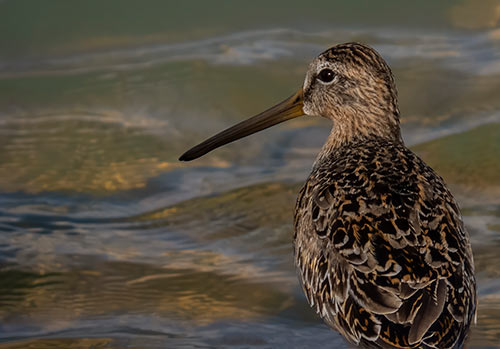
Short-billed Dowitcher
The Short-billed Dowitcher is one of the first birds to arrive on Bonaire in fall migration. Here, it displays remnants of its breeding plumage.
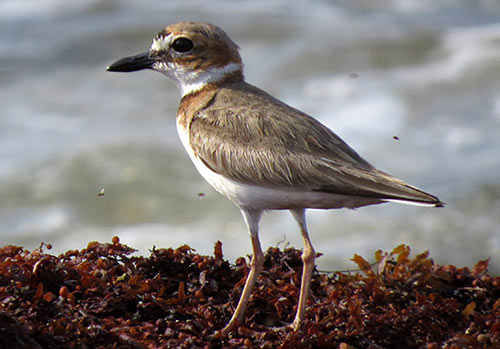
Wilson's Plover
The Wilson’s Plover is one of the resident shorebirds one might observe in Bonaire’s southern salt ponds.
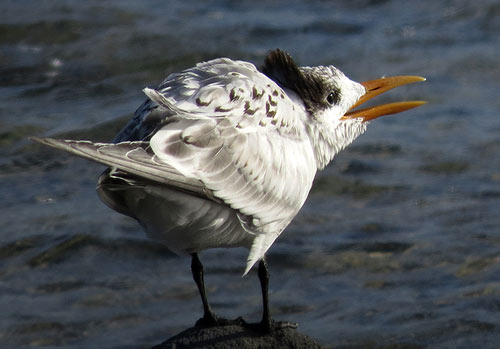
Royal Tern (juvenile)
A juvenile Royal Tern assumes a begging posture, which, when combined with a certain call, will prompt its parents to feed it.
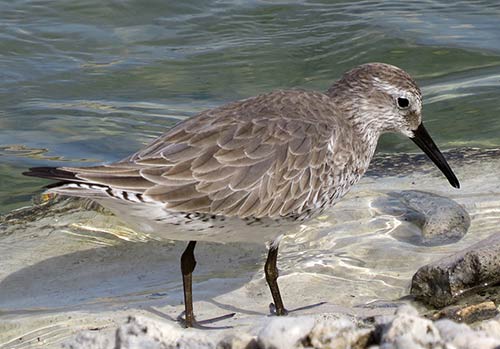
Red Knot
A Red Knot, one of the threatened shorebirds using Bonaire’s salt ponds for migration, forages along the coastline.
The Tropical Dry Forest: A Living Oasis
Although tropical rainforests often receive the most attention, tropical dry forests are among the world’s most threatened ecosystems. Large portions of these forests in the Caribbean and Central America have disappeared due to agriculture, grazing, and development. Bonaire’s remaining tropical dry forest therefore represents a habitat of exceptional conservation value.
At first glance, especially during the dry season, the forest can appear lifeless. Many trees shed their leaves to conserve water, while thorny shrubs dominate the landscape. Yet beneath this seemingly harsh exterior lies an ecosystem perfectly adapted to seasonal extremes. During the wet season, flowering plants produce abundant fruits and seeds that sustain resident birds as well as newly arrived migrants.
When conditions become drier, insect populations can provide an equally valuable food source for insect-eating warblers, vireos, flycatchers, and other songbirds.
Fresh water, however, remains the limiting resource. Throughout Bonaire, natural and managed watering holes become gathering places where birds of many species converge to drink and bathe. Inside and outside Washington-Slagbaai National Park, these scarce water sources become lifelines, particularly during migration, when exhausted birds must quickly replenish both energy and moisture. A morning spent quietly observing one of these watering holes can reveal an astonishing variety of life. Resident hummingbirds may dart between flowering shrubs while Bananaquits, orioles, and doves arrive to drink. During migration, colorful warblers and other North American migrants often appear alongside resident species, all sharing the same precious resource. The tropical dry forest reminds us that survival is often less about abundance than about resilience. Every tree, flowering shrub, fruiting cactus, and freshwater pond contributes to an intricate web that supports birds throughout the changing seasons.
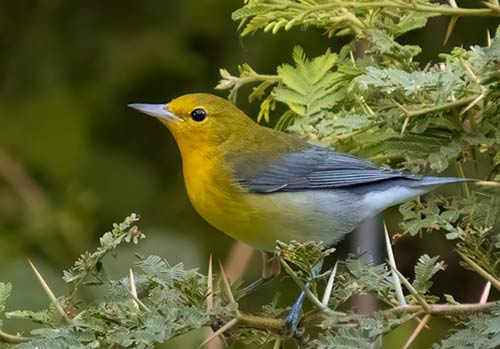
Prothonotary Warbler
This Prothonotary Warbler was observed at a watering hole in the north’s tropical dry forest area.
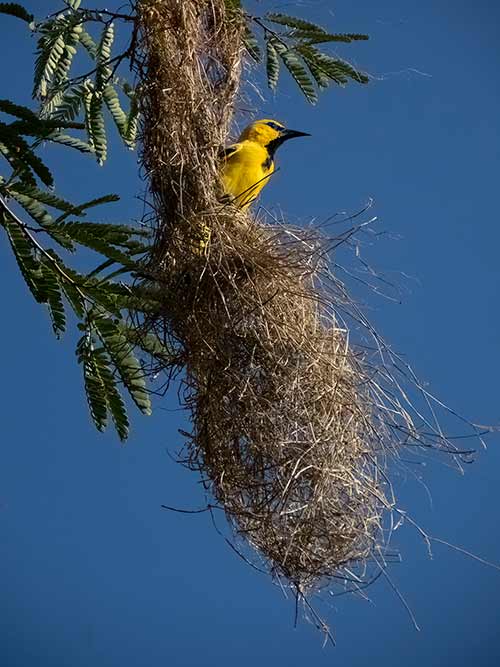
Yellow Oriole
The Yellow Oriole is often observed in the tropical dry forest of Bonaire’s northern section. Here, it is building a woven nest in advance of the breeding season.
The Mangrove Forests of Lac Bay: Nature’s Nursery
On Bonaire’s southeastern coast lies one of the island’s richest ecosystems: the mangrove forests of Lac Bay. Here, the mangroves create a maze of sheltered waterways where land and sea merge.
Mangroves are famous for protecting coastlines and serving as nurseries for fish, but they are equally valuable for birds. Their dense vegetation provides shelter from predators, protection from storms, abundant nesting opportunities, and a constant supply of food.
Unlike habitats that primarily serve one group of birds, the mangroves support remarkable diversity. Terrestrial songbirds forage among the branches while shorebirds patrol muddy edges exposed by changing tides. Herons and egrets stalk fish through shallow channels, and raptors use taller trees as hunting perches overlooking the surrounding wetlands.
Maintaining healthy mangroves requires ongoing conservation. Recent restoration efforts have focused on improving water circulation, removing accumulated sediment, and restoring natural tidal flow. These projects help ensure that the mangroves continue functioning as healthy ecosystems capable of supporting both marine life and birds for generations to come.
Birders exploring Lac Bay may encounter Green Herons, Tricolored Herons, Little Blue Herons, Great Blue Herons, Yellow-crowned Night Herons, Ospreys, Belted Kingfishers, and numerous migratory warblers using the mangroves as temporary homes during their long journeys.
The mangroves illustrate how one habitat can support an incredible variety of lifestyles simultaneously, making them one of Bonaire’s most productive natural communities.
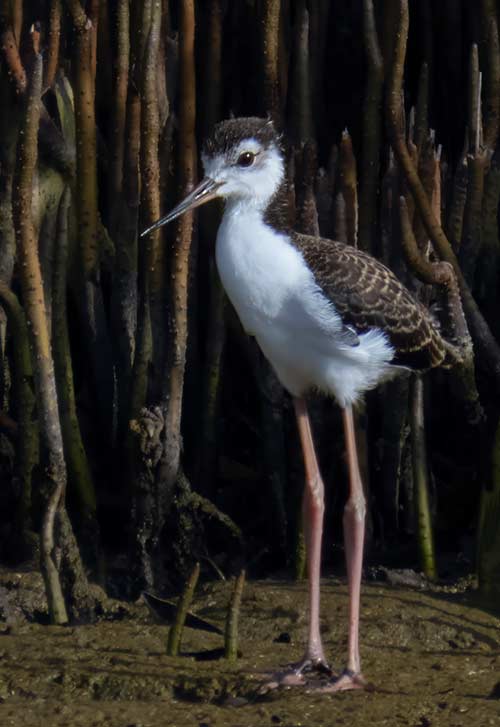
Black-necked Stilt (juvenile)
Lac Bay is one of the nesting areas of the Black-necked Stilt. Here, a juvenile takes a tentative step out of the mangrove roots which provide it cover.
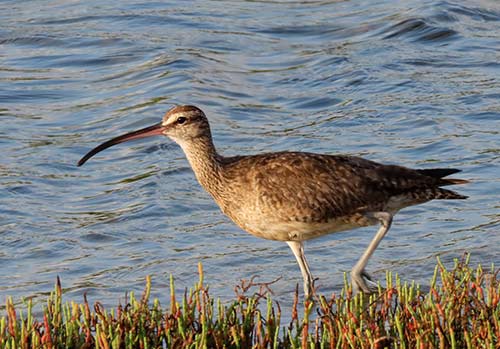
Hudsonian Whimbrel
The Hudsonian Whimbrel is often observed foraging around Lac Bay.
The Rocky East Coast: Where Wind and Waves Shape Life
While Bonaire’s western coastline is calm and protected, the island’s eastern shore presents a dramatically different environment. Constant trade winds and pounding surf create a rugged coastline of limestone terraces, rocky inlets, and isolated coves that remain largely inaccessible.
For wildlife, this inaccessibility is a tremendous advantage. Many seabirds require nesting or roosting sites free from frequent human disturbance. The isolated rocky shoreline provides exactly those conditions.
Here, visiting terns can establish breeding colonies with minimal interference, increasing their chances of successfully raising young. Seabirds that do not breed on Bonaire can still find ideal conditions for roosting, gathering in colonies along the rocky shoreline at night.
The rocky coast is also surprisingly diverse beyond its shoreline. Pockets of coastal forest and shrubland offer important stopover habitat for migrating songbirds, while rocky tide pools and grassy plateaus provide feeding opportunities for shorebirds adapted to these unique conditions.
Specialized feeders such as the Yellow-crowned Night Heron take advantage of the abundant crabs inhabiting the rocky shoreline. Their sturdy bills are perfectly suited for capturing and handling crustaceans that few other herons pursue so effectively.
Offshore, seabirds patrol the turbulent waters where waves and currents concentrate schools of fish. Magnificent Frigatebirds soar effortlessly overhead, while Brown Boobies, terns, and other seabirds search for feeding opportunities created by the dynamic marine environment.
The east coast demonstrates that even harsh landscapes possess remarkable ecological value. Habitats that appear inhospitable to people have become ideal refuges for birds that depend upon isolation and natural coastal processes.
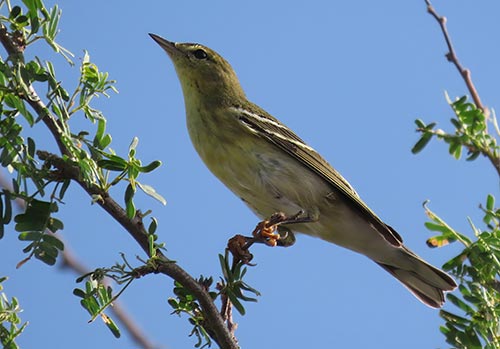
Blackpoll Warbler
Migratory songbirds, such as this Blackpoll Warbler, will use pockets of forestation along the east coast to rest and refuel during migration.
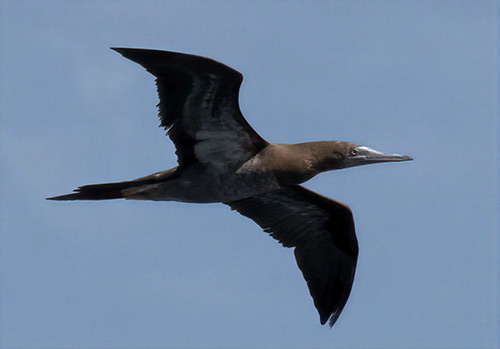
Brown Booby
A Brown Booby hunts low over the water along Bonaire’s east coast.
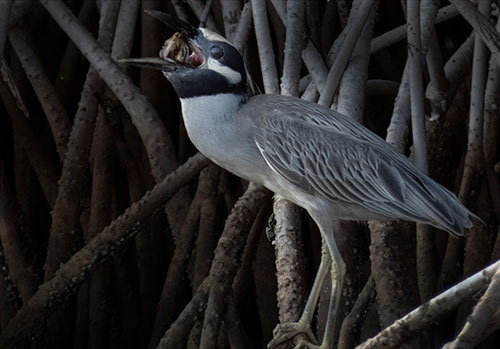
Yellow-crowned Night-Heron
The Yellow-crowned Night-Heron is a crab specialist. It finds excellent hunting along Bonaire’s eastern coastline.
Grasslands and Agricultural Fields: Open Country Specialists
The central portion of Bonaire presents yet another landscape. Open grasslands, grazing areas, and agricultural fields may seem ordinary compared to the island’s dramatic coastlines, yet these habitats support birds that cannot thrive elsewhere.
Perhaps the most significant resident is Bonaire’s endemic subspecies of the Grasshopper Sparrow (Ammodramus savannarum caribaeus). Restricted to relatively small areas of suitable habitat, this vulnerable bird depends upon healthy native grasslands for nesting and feeding. Changes in land use, overgrazing, and habitat loss can quickly affect populations of such specialized species, making the protection of open grasslands an important conservation priority.
These grasslands also become important feeding areas for migrating shorebirds. While many people associate shorebirds exclusively with beaches and mudflats, several species prefer short grassy fields where they search for insects and other invertebrates. Seasonal rains can transform agricultural areas into productive feeding grounds during migration.
In these grassy habitats, it’s possible to see the Western Cattle Egret walking calmly among grazing donkeys or goats. This remarkable partnership benefits the birds, which capture insects disturbed by the movement of the larger animals. The relationship has allowed cattle egrets to successfully colonize landscapes around the world, and Bonaire’s grazing lands provide ideal conditions for this adaptable species.
Other birds commonly encountered in these open habitats include Groove-billed Anis, Southern Lapwings, Northern Scrub Flycatchers, Brown-crested Flycatchers, and a variety of seasonal migrants such as American Golden Plovers and Pectoral Sandpipers, depending on rainfall and habitat conditions.
The grasslands remind us that conservation is not limited to pristine wilderness. Working landscapes can also provide critical habitat when managed thoughtfully and sustainably.
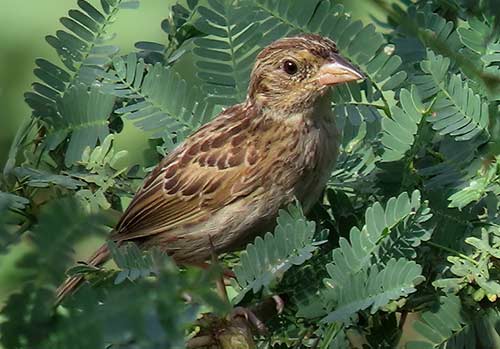
Grasshopper Sparrow
The endemic subspecies of the Grasshopper Sparrow can be observed in Bonaire’s central grasslands.
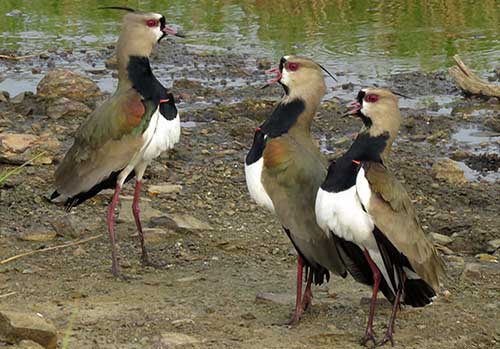
Southern Lapwing
The Southern Lapwing is a resident, breeding bird with a preference for fresh-water habitats.
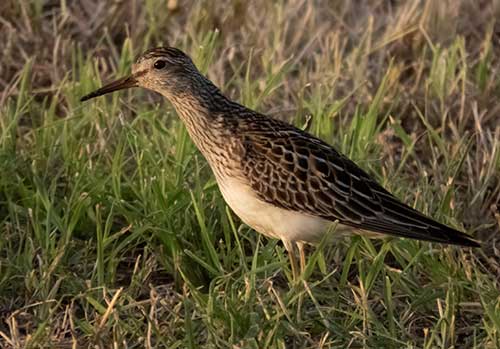
Pectoral Sandpiper
Although the Pectoral Sandpiper can be observed in marine environments, it appears to have a preference for marshy grass areas.
A Small Island with Great Importance
It is easy to overlook Bonaire’s ecological significance because of its modest size. Yet within just 112 square miles, the island contains an extraordinary collection of habitats that together support hundreds of resident and migratory bird species throughout the year.
Each habitat plays a distinct role. The salt ponds sustain hungry migrants. The tropical dry forest provides seasonal food and precious freshwater. The mangroves shelter birds of every description while protecting the coastline. The rugged east coast offers safe breeding and feeding areas beyond human disturbance. The grasslands sustain specialized resident species while welcoming migrants passing through.
No single habitat could support all of these birds on its own. Their survival depends on the availability of multiple habitats, each solving a different challenge presented by migration, breeding, feeding, or simply enduring life on a dry Caribbean island.
For birdwatchers, this diversity means that every day spent exploring Bonaire offers something different. A morning among flamingos in the salt ponds may be followed by warblers in the dry forest, herons in the mangroves, seabirds along the east coast, and grassland specialists in the island’s interior.
For conservationists, however, the lesson is even more profound. Protecting birds means protecting the entire mosaic of habitats upon which they depend.
Bonaire’s greatest natural treasure is not any single species or location, but the remarkable way its varied landscapes work together to sustain life. Within just 112 square miles, Bonaire demonstrates that diversity is one of nature’s greatest solutions for survival.

Sign up to receive notifications when a new article is posted.
About the author:
 Susan has been living on Bonaire for over 30 years. She is a certified bird guide, as well as a topside and underwater photographer. She is a 2016 graduate of the Caribbean Birding Trail Interpretive Guide Course conducted by BirdsCaribbean.
Get in touch with Susan
Contact Susan via email, Facebook Messenger, call Susan or use the online form below.
If you have any questions about your Bonaire birding tour, feel free to contact Susan for answers. She is always willing to go into more detail about routes or the best times for a tour based on your personal preferences. Tours can be tailored to your interests, whether that be birds, photography, or both!
It is also a good idea to do some homework on the birds of Bonaire before you come. Knowing a little about the birds you might encounter on your tour will make your experience even more enjoyable!
Be sure to check out these resources for birding on Bonaire. Also, reading the Bird Blog will introduce you to the birds that might be observed on Bonaire.
Get In Touch
Get in touch with Susan to check availability for the dates you are visiting Bonaire.
Consent: By using this form you agree with the storage and handling of your data by this website.
